

Two conferences, two very different rooms, one conversation. Everyone is talking about AI. The best ones aren’t scared of it.
I’ve spent the past week bouncing between two very different rooms. The Host Hotels & Resorts GM Conference in Austin and the Independent Lodging Congress’ IndieCultivate in Boston. One is a major institutional REIT with about 80 properties. The other is an independent lodging community that runs on scrappiness, gut instinct, and independent-minded hustle. The audiences couldn’t be more different. But the gravitational pull of every conversation was exactly the same.
Everyone is talking about AI and how to balance that with delivering the best human experiences.
And if you listen closely to the best operators and thinkers in our industry from different ends of the hospitality spectrum, they’re not necessarily talking about AI as a tool to replace people. They’re talking about it as a tool to elevate them.
The Seed Has to Crack Open
At the Host conference, the lunchtime keynote speaker, Mitch Joel, took the stage and framed the moment better than anyone I’ve heard. Mitch is the kind of speaker who makes you pull out your notebook, phone, or iPad as I like to do, and start scribbling notes (I filled four pages). He opened with a quote from fiction writer Cynthia Occelli that made me pause and realize I better start taking pictures of these slides: “For a seed to achieve its greatest expression, it must come completely undone. The shell cracks, its insides come out, and everything changes. To someone who doesn’t understand growth, it would look like complete destruction.”
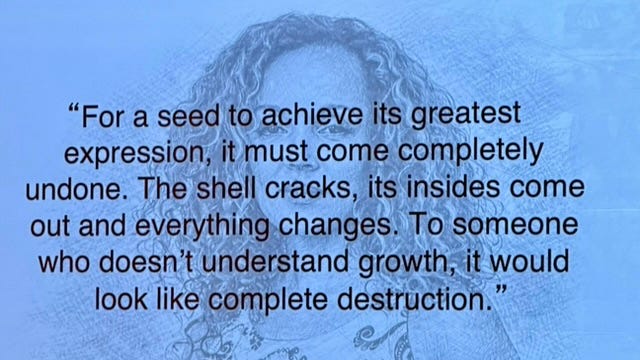
That’s where we are right now. And Mitch’s point was simple: don’t confuse disruption with destruction. They’re not the same thing.
He also killed the “move fast” mantra that every conference seems to worship. His provocation: speed is dead. Not that things aren’t fast (they are, obviously), but that speed is now a given. Stop treating it like a strategy. Direction is more important than speed. Direction and momentum will always beat velocity without a compass. What’s your north star? Where are we heading, let’s back in from there.
From the Attention Economy to the Intimacy Economy
This is the idea from Mitch’s talk that I can’t stop thinking about. He referenced Yuval Noah Harari (Sapiens, Homo Deus) saying that we’re moving from the attention economy to the intimacy economy. For years, brands have spent 70% of their energy shouting into the void to capture attention and 30% actually building something worth shouting about. That’s inverting.
Mitch reframed it for our industry: AI’s fundamental superpower is intimacy and memory. Not answering emails faster. Not automating your check-in kiosk. The ability to know a guest, remember a guest, and make every interaction feel like it was designed for that one person.
Think about it. When the bartender at your hotel knows what I drink before I sit down, that’s intimacy. When the front desk remembers that I prefer a high floor with a city view and I’m not a feather pillow person, that’s intimacy. We’ve always known this is the magic of great hospitality. What’s changed is that we now have tools that can deliver it at scale, for every guest, every stay.
This concept actually validates exactly why I focus so heavily on my symposium dinners and 1:1 Defining Hospitality podcasts. It’s all about cutting through the noise to create connections that are deeply personal and memorable. The live moment, once ordinary, is becoming a premium product. And maybe it always was in relationship driven industries, but we perhaps confused ourselves. I have been guilty here too.
Have a Better PACE
Mitch introduced a framework he calls PACE, and I think it’s worth writing down:
P. Palette. Master a broader taste of creative, strategic, and technological tools. Train yourself to see the awe behind the obvious. Taste isn’t something you’re born with, it’s something you cultivate.
A. Agency. Be proactive, resilient, and trusted. Don’t wait for change to happen, create it. Agency is what distinguishes us from the machines. He made a point that landed: the bad guys in The Matrix were called Agents. Twenty-five years later, we literally invented them. Your human agency will always be greater than any AI agent. Like Rob Zombie sang, be “more human than human.” This is our opportunity to do our very specific thing that we’re all very good at.
C. Commune. The strength of your network outweighs the strength of your product. BELONGING (this one keeps coming up everywhere lately) in our squishy “protein forms,” as Mitch put it, is everything. There’s a reason I traveled to Austin and Boston this week instead of watching a webinar.
E. Elevate/Educate. Continually raise the bar. Seth Godin (I’ve been a big fan of Akimbo for a while), according to Mitch, said it best: you can raise the bar or you can wait for others to raise it, but it’s getting raised regardless.
Human First, AI Second
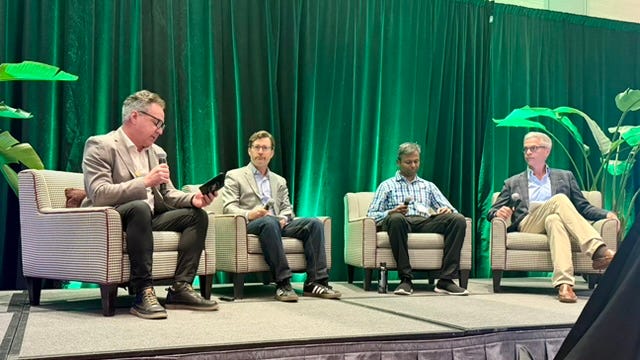
The next morning I was in Boston for IndieCultivate, and I watched a panel called Practical AI for Lean Teams, moderated by David Millili. The panel featured Matt Schwartz (Sage Hospitality Group), Tim Kinsella (Canary Technologies), and Rogers Leo (Mews). And they echoed everything Mitch had said the day before, but from the operator’s trench.
Someone had asked Matt how many FTEs Sage is replacing with AI. His answer: zero.
Not a diplomatic zero. A resounding zero. Matt explained that they’re not replacing jobs, they’re replacing discrete, repetitive tasks. Revenue management spreadsheets. Housekeeping schedules. Answering the same guest text about pool hours for the 400th time. The things that keep your team staring at screens instead of looking guests in the eye.
Matt put it perfectly: “We are unapologetically a human first company. AI is second.” If your front desk team is spending 80% of their time behind screens and 20% in front of guests, AI is the tool that flips that ratio. That’s the whole point. Get people out from behind their screens so they can do the high-EQ work they actually signed up for.
Tim Kinsella drew a useful distinction between linear automation (if A happens, do B) and agentic AI that can actually read context, make decisions, and route to a human when it senses the conversation needs a real person. Rogers Leo framed it as watch, suggest, act: the AI watches your property data, starts suggesting actions, and once you trust it enough, you let it act on your behalf within guardrails you’ve defined. But the guardrails are yours. The brand standards are yours. The AI just does the math faster.
Start Playing
Both events offered the same practical advice, and it’s so simple it almost sounds too easy: start playing, similarly to riding a bike. Start riding, you might fall or bump into something, but the road to riding can make us all irreplaceable. Matt compared AI literacy to learning a foreign language. You can be literate, proficient, or fluent. Right now, most people in hospitality are barely literate. His advice: put ChatGPT, Claude, or Google NotebookLM in the dock (pole position) of your phone, what you see every time you pick it up. Spend 20 minutes a day using it. Have it draft a policy. Summarize a report. Write a guest response. Just build the muscle.
Matt shared a stat that surprised me. When Sage rolled out ChatGPT Enterprise across their organization, 25% of people didn’t even accept the invite. Just left it sitting there unopened because they might have been afraid of using it. Of those who did accept, about half are now using it weekly, averaging 24 chats a week. The people who leaned in saw the magic. The ones who didn’t are the ones who’ll fall behind.
Rogers made a point that’s worth repeating (I love this): AI is an accelerator and an amplifier. If you have great processes, AI will amplify the great. If you have broken processes, AI will amplify the broken. Fix your foundation first. Know your data. Set your guardrails. Then let the AI loose.
Don’t Lobotomize Your Business
This was Mitch’s line and it’s the one that’s going to stick with me. He highlighted the word “bot” in lobotomize on purpose. The goal is not a fully automated, bot-run hotel. The goal is to let the bots handle the friction so the humans can create meaning.
He gave an example that made the room laugh: if you’re using AI to respond to an email that your boss used AI to write to you, based on a report that was generated by AI, from a spreadsheet made by AI, what are we doing? “Bot-on-bot action is not hot.” That is not the opportunity.
The opportunity is intimacy. Memory. Recognition. Making someone feel like they matter, not like they’re being processed.
Hospitality has always been, and will always be, a human-centric business. The magic happens in the live moment, in physical presence, in the community we build when we actually show up in the same room together (as all of us did this week).
1% More Curious Than Afraid
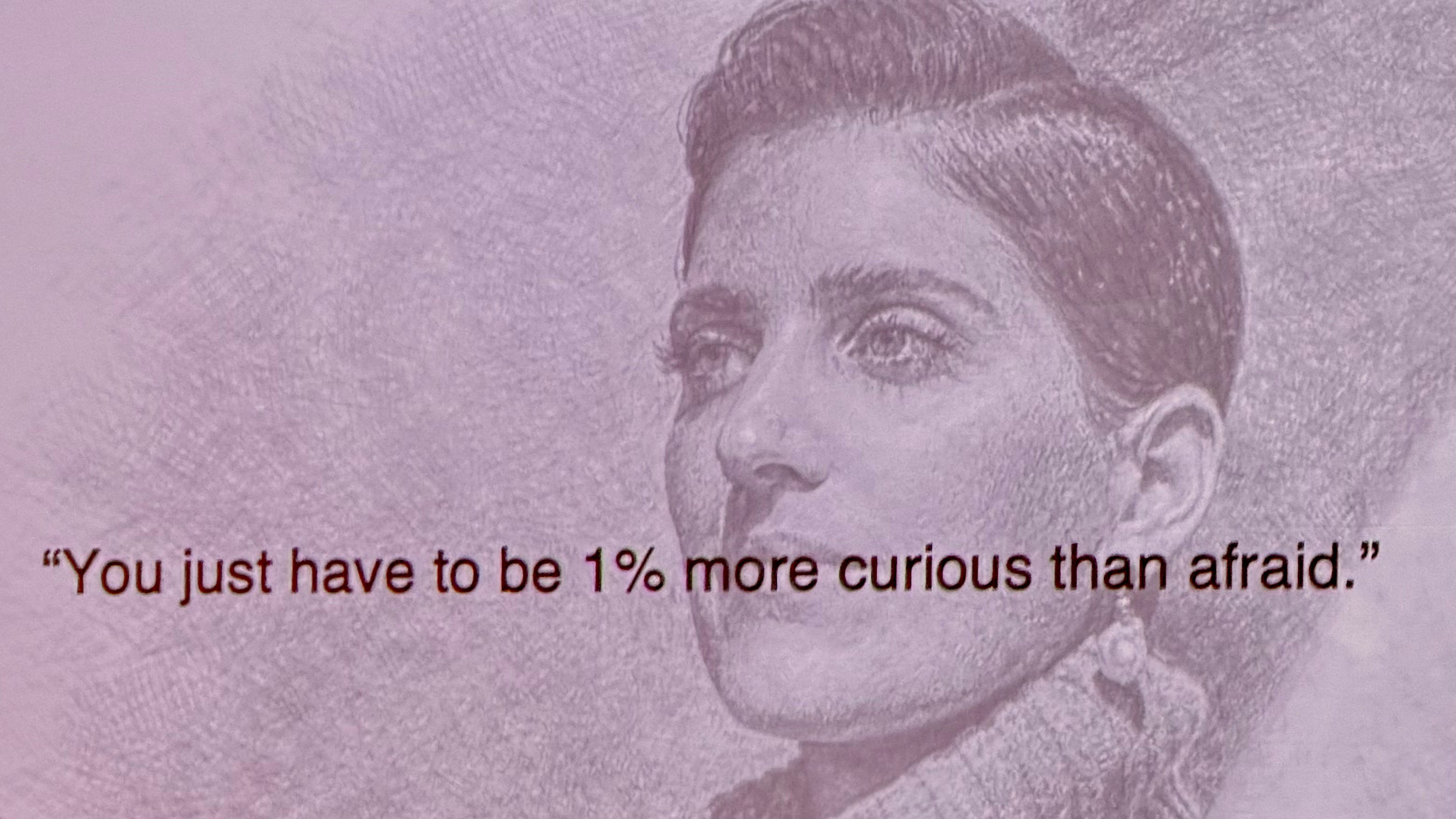
Mitch closed with a line that I think should be pinned to the wall of every hotel office in the country. It came from Suleika Jaouad, who wrote Between Two Kingdoms: “You just have to be 1% more curious than afraid.”
That’s it. That’s the whole thing. You don’t have to master AI overnight. You don’t have to hire a Chief AI Officer tomorrow. You just have to be a little more curious than you are scared, and then show up again the next day and do it again.
Direction over speed. Intimacy over automation. Humans first, always.