

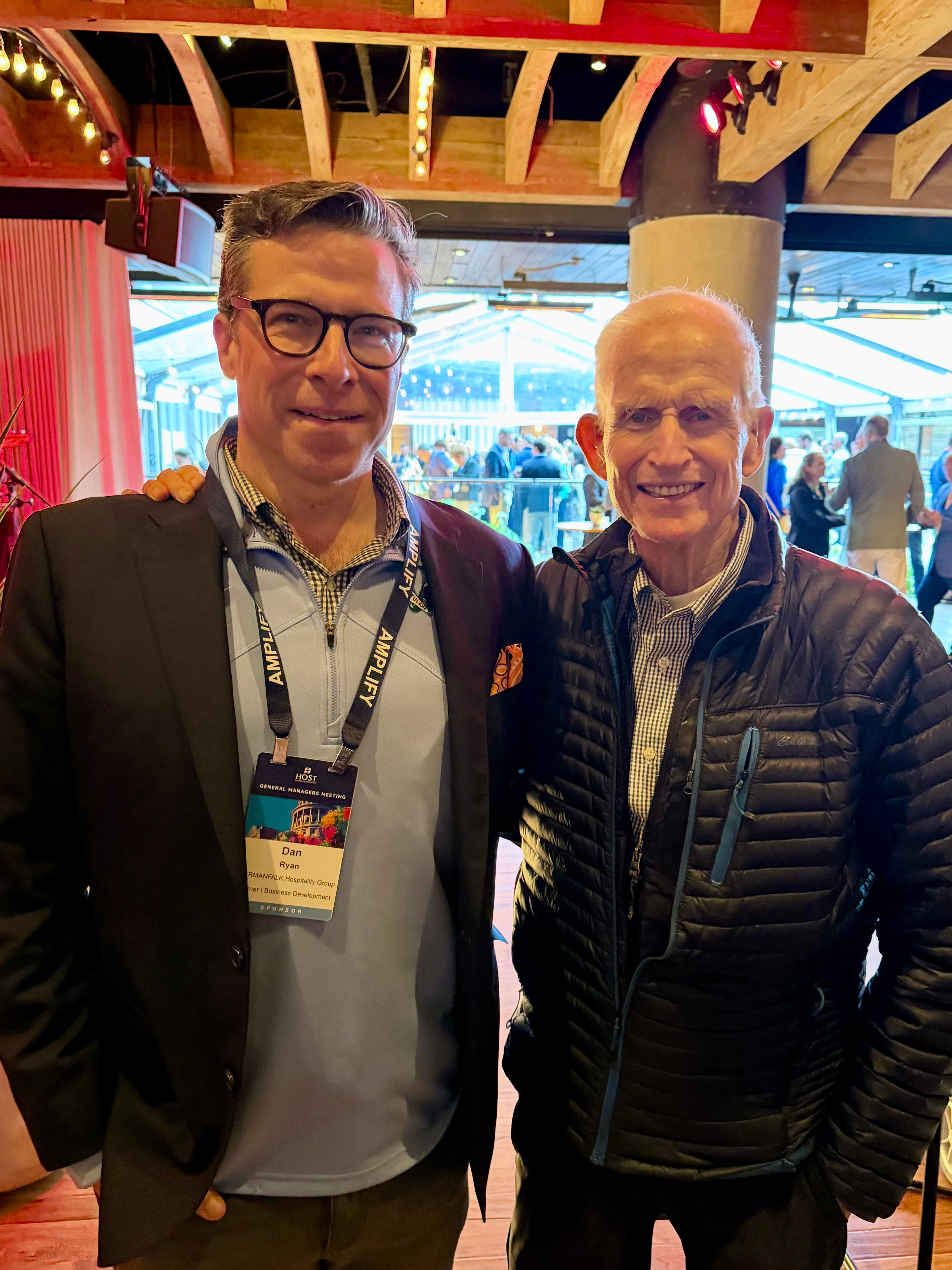
I was walking out of the ballroom at the Hyatt Regency Austin when I bumped into Mr. Marriott. Shook his hand and relished every time I’ve spoken to him: this was the third. Either way, it felt like the right punctuation on the afternoon I’d just had.
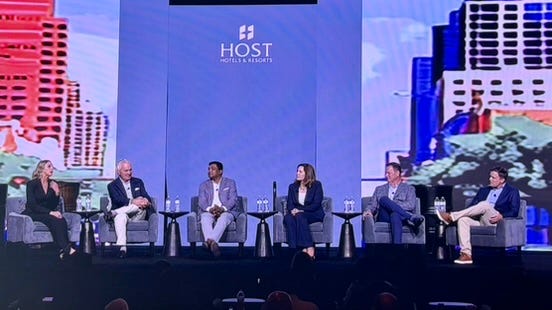
Because the conversation I’d just walked out of was different from the one I heard two years ago in San Francisco.
Two years ago, Host Hotels & Resorts held their GM meeting when the industry still had COVID not too far in the rearview mirror, and the phrase of the day then was “fortress balance sheet.” Rightfully so. Host had the capital structure, the discipline, and the portfolio to weather what a lot of companies couldn’t. It was a financial story, told in financial terms, to a room that needed to hear it. And it helped me, and BERMANFALK, thrive, grow, and evolve over those turbulent years on the heels of COVID.
This year in Austin, the fortress is still standing, and standing strong. Jim Risoleo said it plainly: all systems go. Very little new supply coming in. The affluent consumer is well-heeled. A generational transfer of wealth is on the horizon, and those consumers are going to spend it on experiences. The balance sheet is as strong as ever.
But the conversation has moved.
The senior team panel, Jim Risoleo, Sourav Ghosh, Nate Tyrrell, Mike Lentz, and Julie Aslaksen, moderated by Jaime Marcus, spent most of its time talking about people. Not headcount. People. Technology came up constantly, but every time it was mentioned, the counterbalance was immediately back to people.
Mike Lentz said it directly: the pandemic exposed that employees and labor are not interchangeable. They are our core assets. Julie Aslaksen, who joined Host in November 2019, just before one of the hardest periods this industry has faced, said the thing that gives her the most optimism about the future is the strength of the hospitality professionals and the leaders in the room.
And then there was Sourav.
Sourav Ghosh is the technology voice on the panel, and he said “AI” more than anyone else on stage (everyone was egging him on, too). But the term he kept coming back to was EQ. Emotional intelligence. His argument: as technology removes what he calls “transaction friction” (the check-in, the credit card, the QR code), the remaining human touchpoints become higher-value and higher-stakes. You end up with a labor force that has much higher EQ than one that’s just pushing buttons. And here’s the line that stuck: “Every point of contact makes more of a difference when you have more technology.”
I’ve been writing about this. The idea that AI isn’t going to replace the people who got into hospitality because they love hospitality. It’s going to strip away the friction around running a hotel so those people can do the work they actually signed up for. Hearing it echoed from the stage at Host’s GM meeting, from the tech executive no less, felt like validation.
A few other moments that stuck with me:
Mike talked about climate resilience as a value driver, not a nice-to-have. Storms are stronger and more frequent. But here’s what reframed it for me: hardening your assets isn’t just about protecting property. It’s about being able to open your doors as a place of refuge for displaced families, some of whom are your own employees and first responders. That reframes resilience from insurance to hospitality.
And then there’s the concept of digital twins, which came up multiple times. Nate described presentations that he’s seen with Nvidia to build digital replicas of hotels so you can run scenario analysis (operational changes, ROI on renovations, physical dynamics) all in AI before disrupting the real building. Mike extended the concept to the guest side: a digital twin that anticipates what someone needs before they have to ask. The building gets modeled. The guest gets modeled. The thing that can’t be modeled is the human standing in front of them. That’s the irreplaceable part. I’m pretty sure the notion of the “digital twin” has firmly supplanted the idea of the metaverse.
I’ve been in rooms with Host for a while now. BERMANFALK has had the privilege of working on projects like The Hyatt Manchester, Marriott Marquis San Diego, and Marriott Boston Copley, just to name a few. Something like 3,000 rooms across those. What struck me in Austin wasn’t the scale (the scale is always impressive). It was the culture. Everyone in that room, and especially the people on stage, genuinely cared about the people running their hotels. You could feel it.
Two years ago, the story was: we have the balance sheet to survive anything and EVERYTHING.
This year, the story is: we have the people to build anything.
That’s the shift I noticed. From fortress to family.
And the timing matters. With the largest generational transfer of wealth on the horizon, the next wave of travelers isn’t just going to spend more. They’re going to expect more. Hyper-personalized experiences. Stays where the hotel knows who you are before you walk in the door. That’s not something a balance sheet delivers. That’s something people deliver: people with high EQ, freed up by technology, standing in front of a guest who expects to be known.
The fortress got Host through COVID. Their family is what’s going to win the next decade.
And then you walk out the door and bump into Mr. Marriott. Pretty good afternoon.
PS - I will get a selfie with him before the week is out.