

I’m here for the Independent Lodging Congress’ (Full disclosure - I’m a RAVING FAN) IndieCultivate, in Boston, and this afternoon Chris Whittier, Senior Director at Tishman Speyer, walked our group through the Harvard Enterprise Research Campus (the ERC), a seven-acre development sitting between Harvard’s athletic campus and the neighborhood of Allston. It’s roughly a million square feet of new construction, and it’s one of the more ambitious things I’ve seen in hospitality, mostly because the people behind it wouldn’t call it a hospitality project at all.
They’d call it a neighborhood.
The Ecosystem
Here’s what’s on the ground: the Atlas Hotel (250 keys, operated by Highgate), the David Rubinstein Treehouse Conference Center (Harvard’s first university-wide conference center), One Milestone (500,000 square feet of purpose-built lab space), 345 residential units, and a two-acre Greenway that will eventually connect the Charles River to the Honan library in upper Allston, activated with farmers markets, concerts, movie screenings, and art installations.
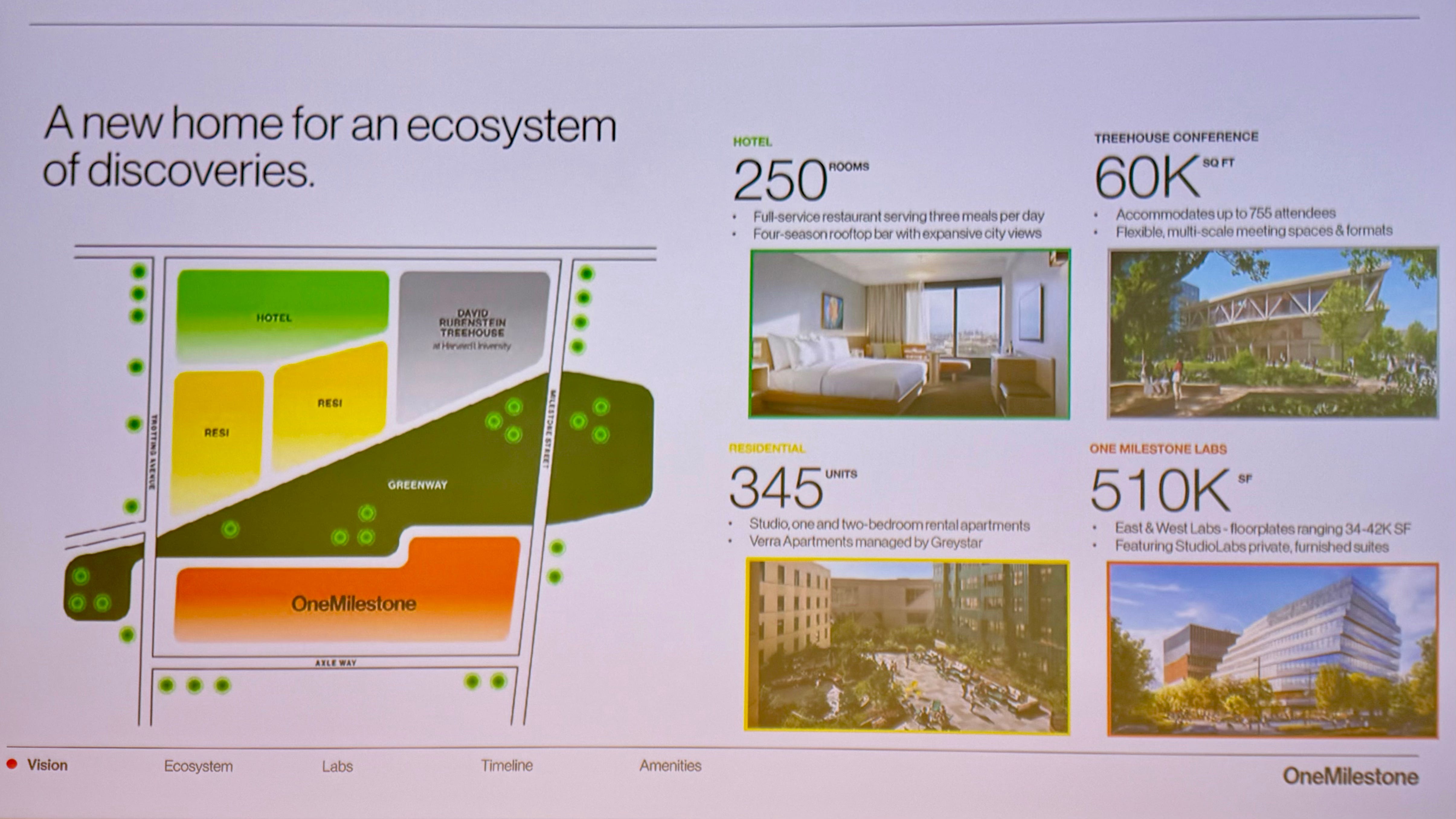
Everything designed to feel like it belongs to the neighborhood, not dropped on top of it.
That last point matters, because I learned that when Harvard started buying up land in Allston in the 1990s, it created real tension with the existing community. People worried their homes would be swallowed up. Chris was candid about it: one of the biggest challenges, but also one of the greatest opportunities, was bridging two neighborhoods that hadn’t historically gotten along.
The hotel was designed with that in mind. Warm, comfortable, not corporate, not academic. An independent lifestyle brand that could belong to a Harvard visiting scholar and a family coming for a weekend in Boston equally. Nicholas Fils-Aimé, Senior Director of Acquisitions & Development at Tishman Speyer (and the first hotel investment in Tishman Speyer’s history, which says something about the conviction behind this bet), called the Atlas a placemaking catalyst. Not a room block for the campus. A catalyst.

Best of Global, Best of Local
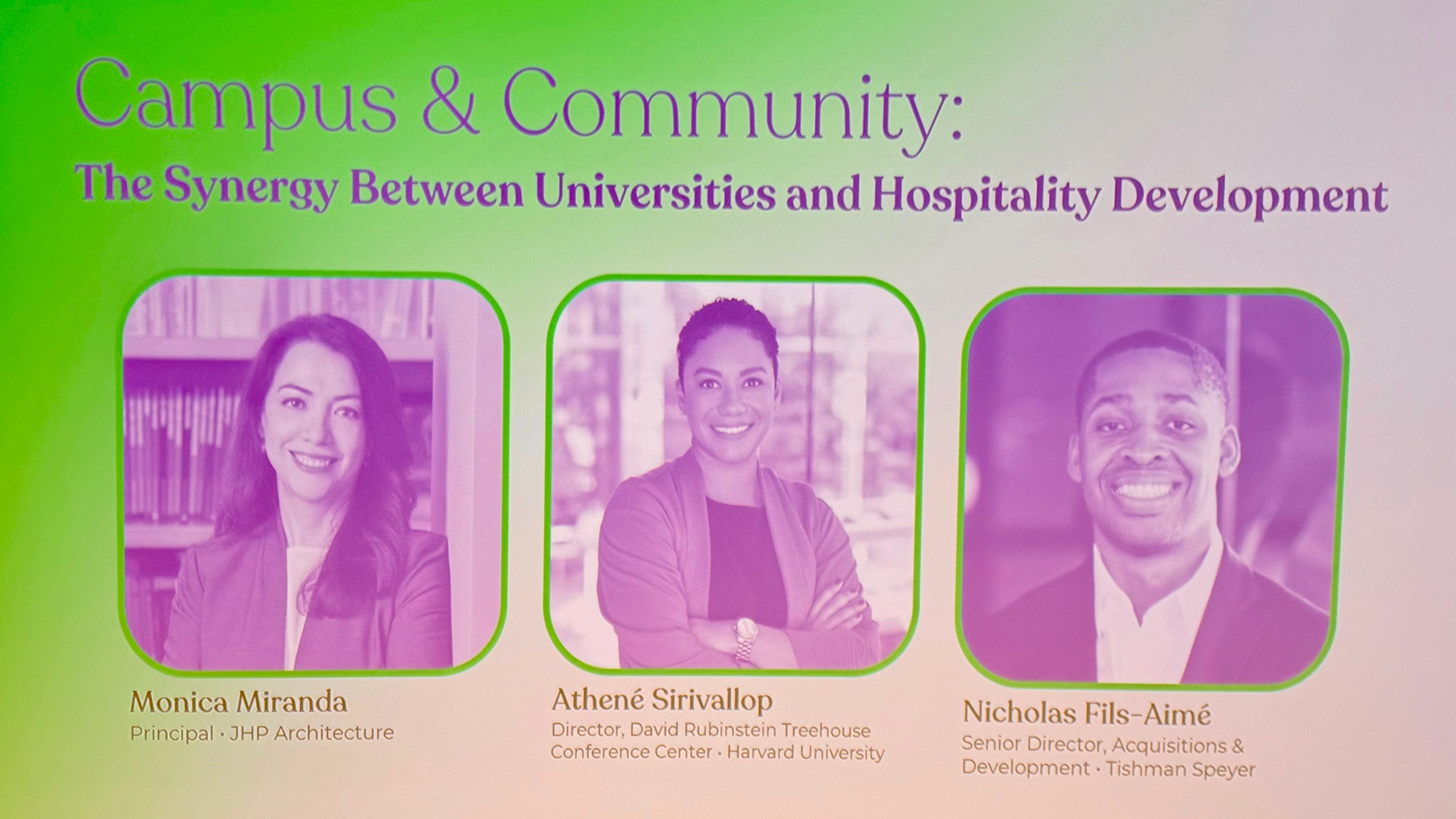
That phrase came up more than once during the panel. Monica Miranda, Principal at JHP Architecture (whose firm was the architect of the buildings), moderated a conversation with Nicholas and Athené Sirivallop, Director of the Treehouse Conference Center at Harvard.
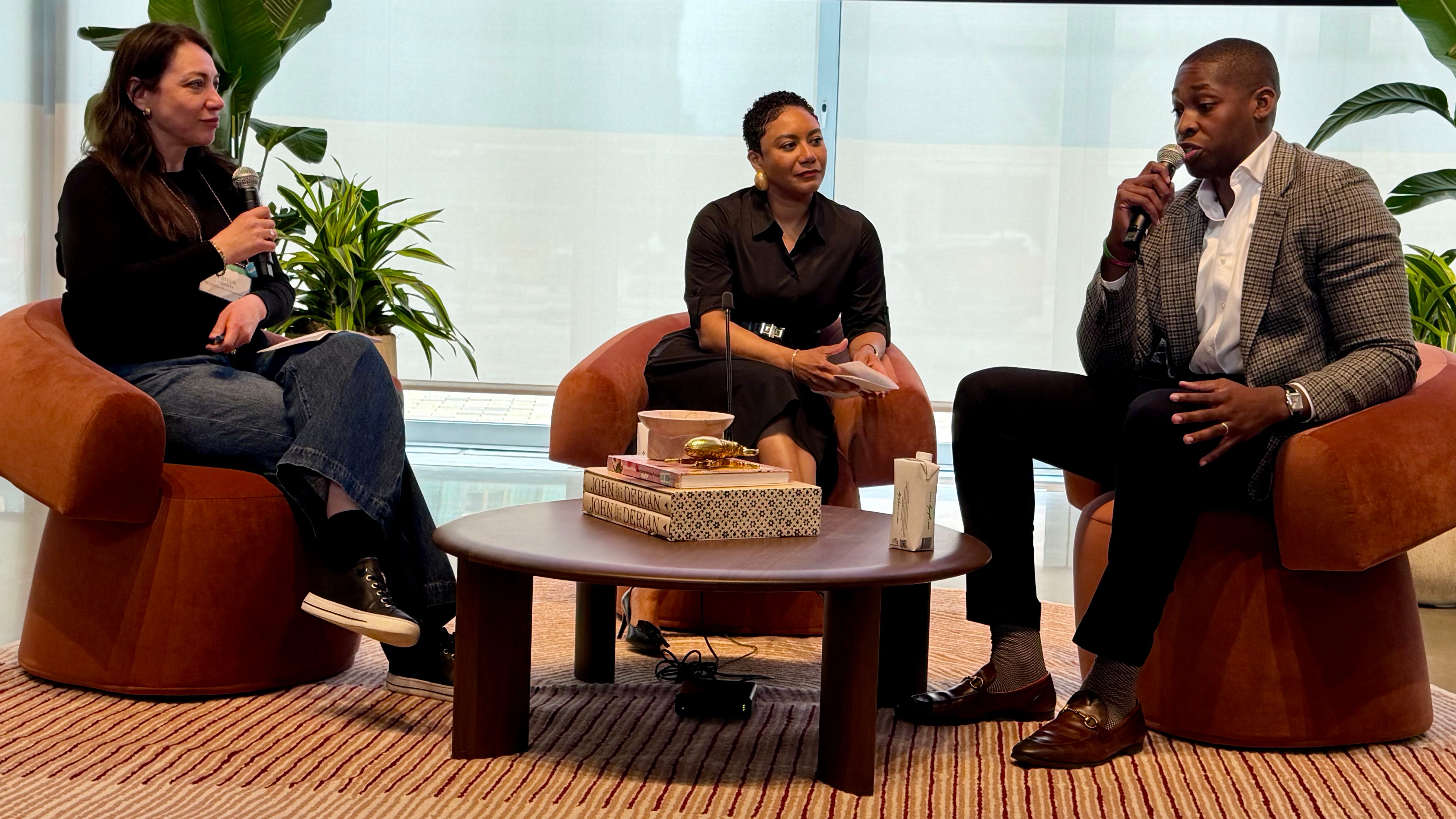
ILC’s Fearless Leader, Andrew Benioff, introduced the panel, and the conversation circled around a question that I think applies well beyond this campus: how do you build something new without losing the soul of the place it sits in?
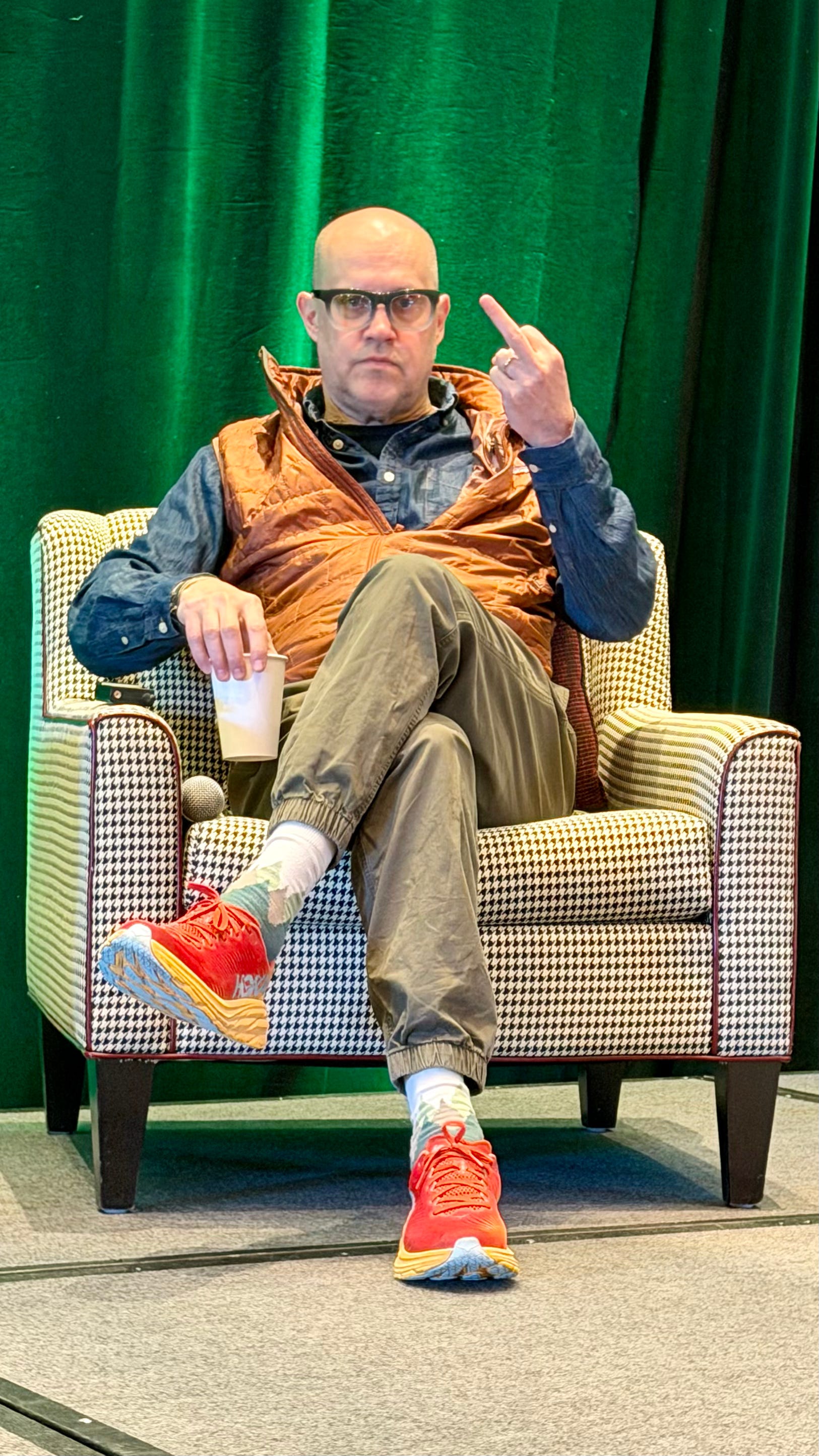
Nicholas answered it clearly. They could have brought in a big restaurant group from New York. Instead they went local: Ama, the ground floor restaurant at the Atlas (where I ate last night, and it’s very good, thanks Ryan for the wine selection and food), and Foxglove, the rooftop bar that’s just opening with panoramic views of the city. The intent was to anchor the hotel in Boston, not just locate it there. Best of global, best of local.
The Treehouse is the same story from the university side. Athené described it as the front door to the campus: a public cafe on the first floor, six breakout rooms on the second, and a canopy ballroom on the top floor that holds up to 800. It’s designed for “collision,” as she said, and if you know me, you know I love collisions. People coming for a conference bump into someone grabbing a coffee who works in the lab next door. That’s the point.
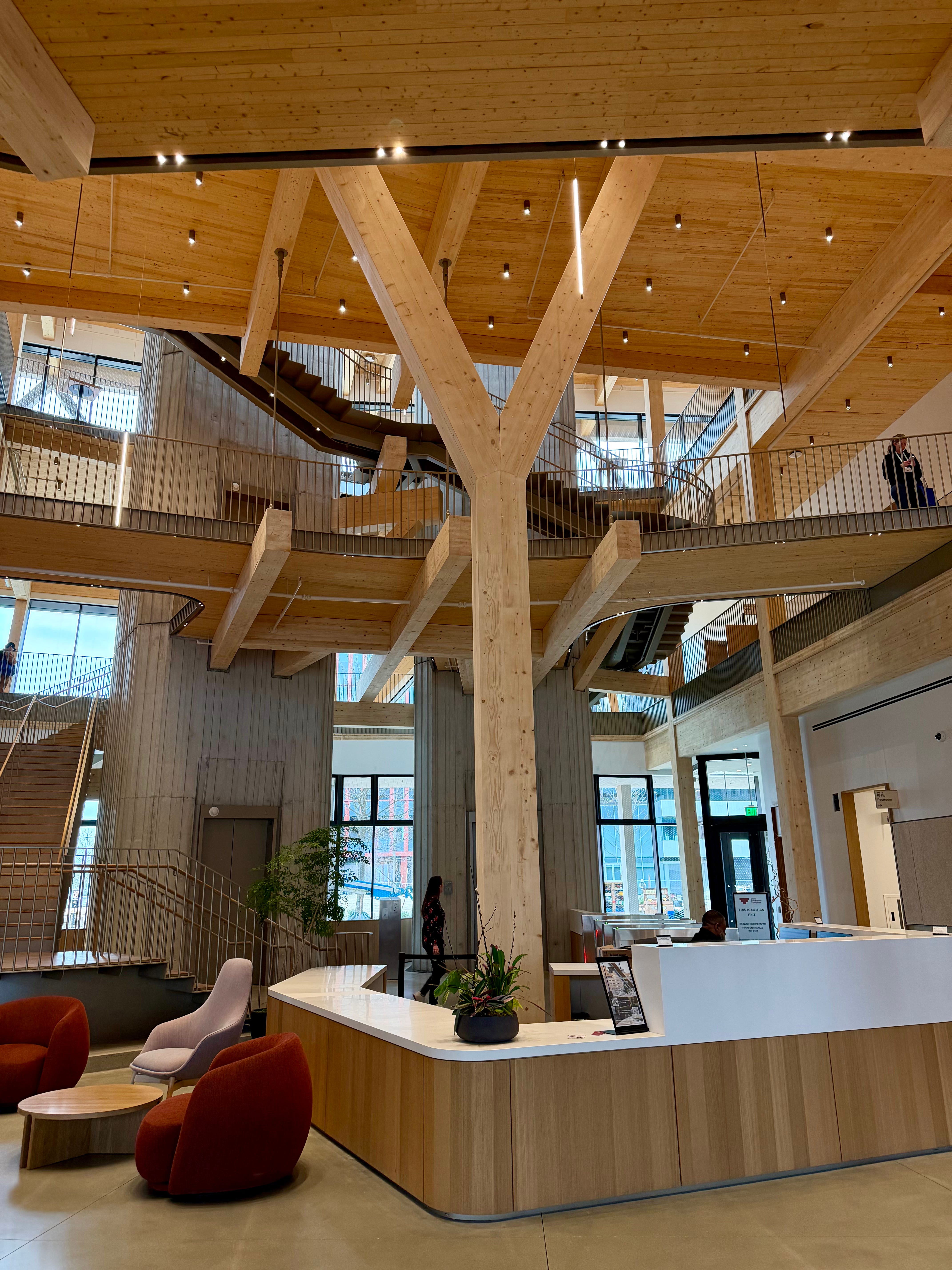
Harvard’s Business School runs executive education programs that bring in over 13,000 professionals a year, right across the street. There isn’t enough housing on campus to hold them all. So the Atlas and the Treehouse feed each other: conferences generate room nights, the hotel generates foot traffic for the restaurants, the restaurants draw residents from the 345 apartments next door, and all of it brings life to a campus that could easily feel like a ghost town after 5pm without it.
Nicholas called it a 24/7 relationship. Not seasonal. Not dependent on graduation weekends or alumni reunions, or football, though those help. The executive education pipeline alone is a year-round demand driver.
Nine Stakeholders, One Group Chat
I asked a question during the panel (I counted the stakeholders on my notepad as they talked, and kept coming up with more). Between Tishman Speyer, the Treehouse, the Atlas, Compass Group, Highgate, Harvard, the Allston community, the David Rubinstein Foundation, and HALC (the Harvard Allston Land Company), that’s at least nine entities that need to be aligned on everything from operations to brand to who picks up the phone when something goes wrong.
Nicholas laughed: “A lot of group chats.”
But then both he and Athené gave a more thoughtful answer. The key is designated single points of contact from each group. Athené represents the Treehouse and the university. If something touches her area, you know who to call. If it touches something deeper inside Harvard, she has a deep bench internally to route it. Nicholas described HALC as the glue that holds it all together: the landlord that connects Tishman Speyer with the right people inside a university that is, as he put it, enormous.
They have weekly calls. They share data. Athené proactively sends activity reports from the Treehouse to inform the hotel and lab teams what to expect. It’s not a formal governance structure so much as it is a culture of frequent communication, single-threaded ownership, and people who are genuinely “mission-aligned.” That was said a lot too.
That last part is the one that’s hardest to replicate, and probably the most important.
Teaching, Learning, Iterating
Athené used the word resilient more than once, and she meant it in a specific way. This project was born during COVID. She started in 2021, during concept design, at a time when talking about convening and gathering felt almost absurd. But she kept coming back to the mission: Harvard advances its academic and research mission by bringing people together. That didn’t change because of a pandemic. The how changed. The why didn’t.
She also described the partnership itself as a teaching and learning exercise. This is Harvard’s first university-wide conference center. Nobody had a playbook. The project iterated (it was originally a conference center with a hotel attached, then evolved into the ecosystem it is today). The operating model is still being figured out in real time. And Athené seemed completely comfortable with that: “We’re a teaching and learning institution. To innovate, to learn, to create, to iterate, that’s part of the course.”
Nicholas acknowledged the tension from the developer side. Tishman Speyer wants to move fast. Harvard thinks in centuries. After all, it was founded in 1636 (flash back to my 7th grade history teacher, Mr. Wilson, thank you). The challenge was understanding the other party’s time horizon and finding a pace that worked for both. That tension, he said, is actually productive when the teams are aligned on what the ERC means for Harvard’s broader expansion.
The Rooms (and the Furniture)
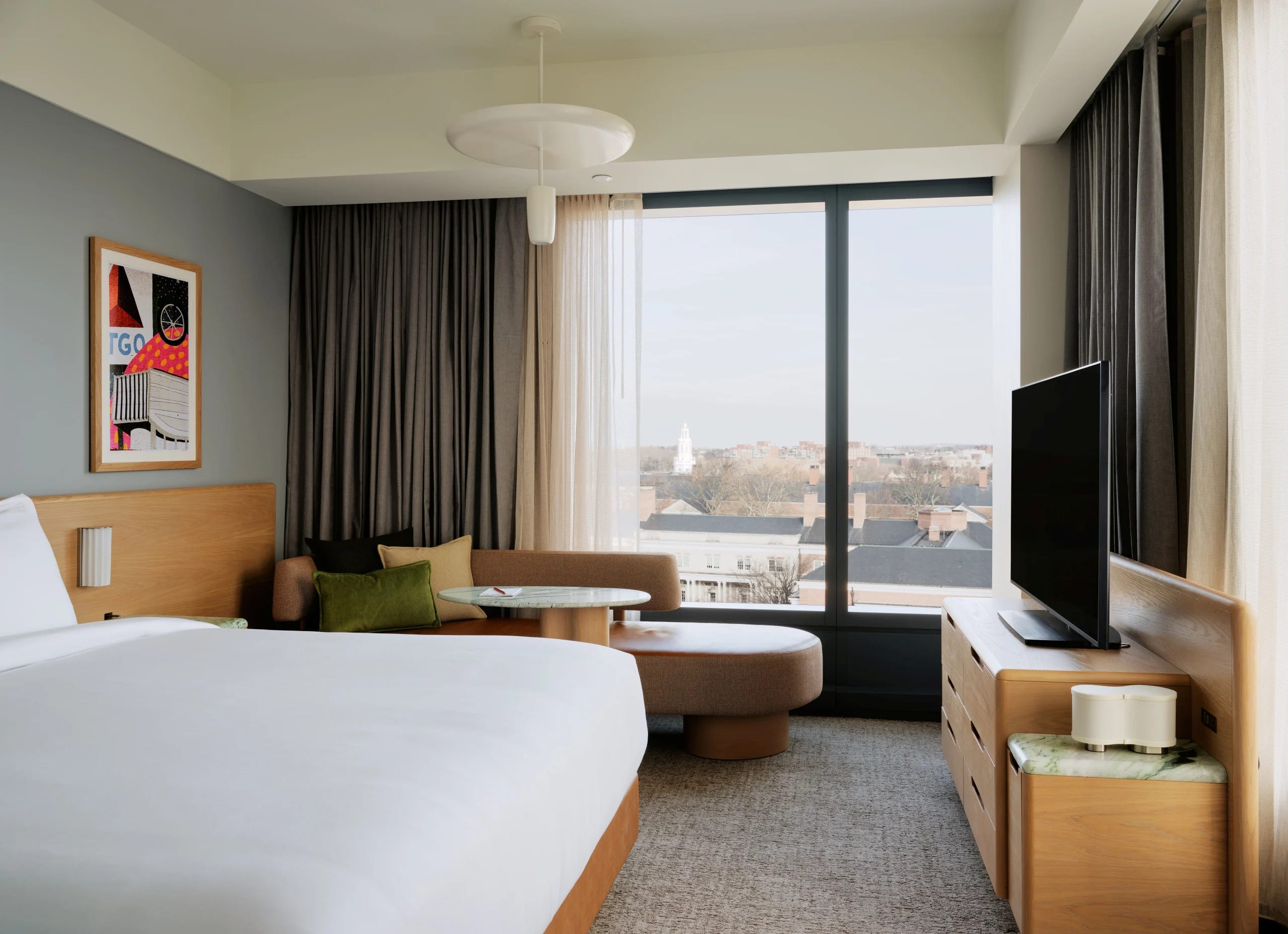
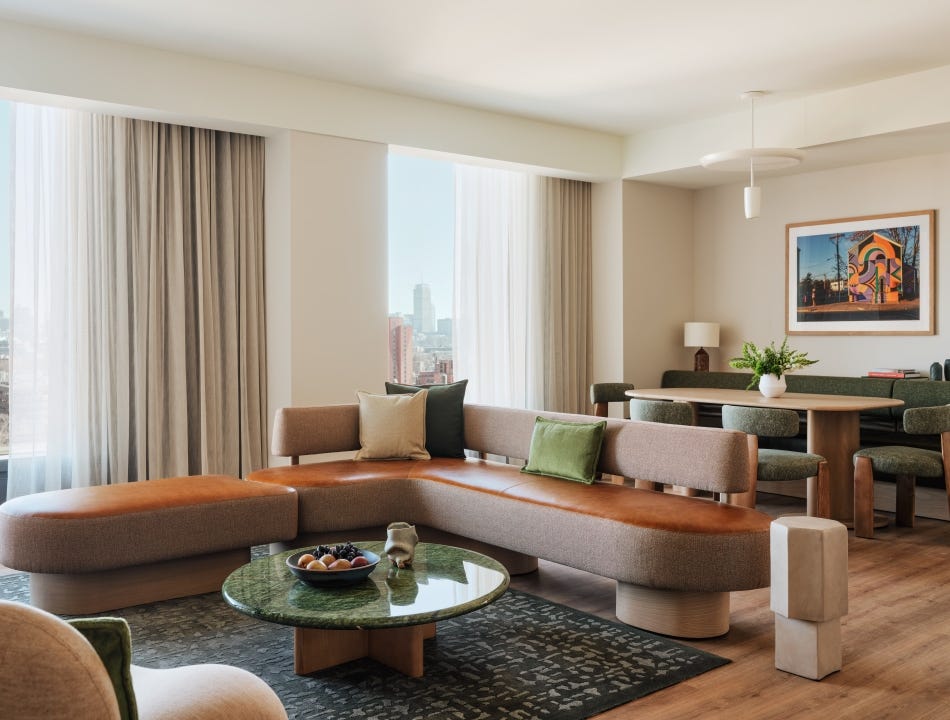
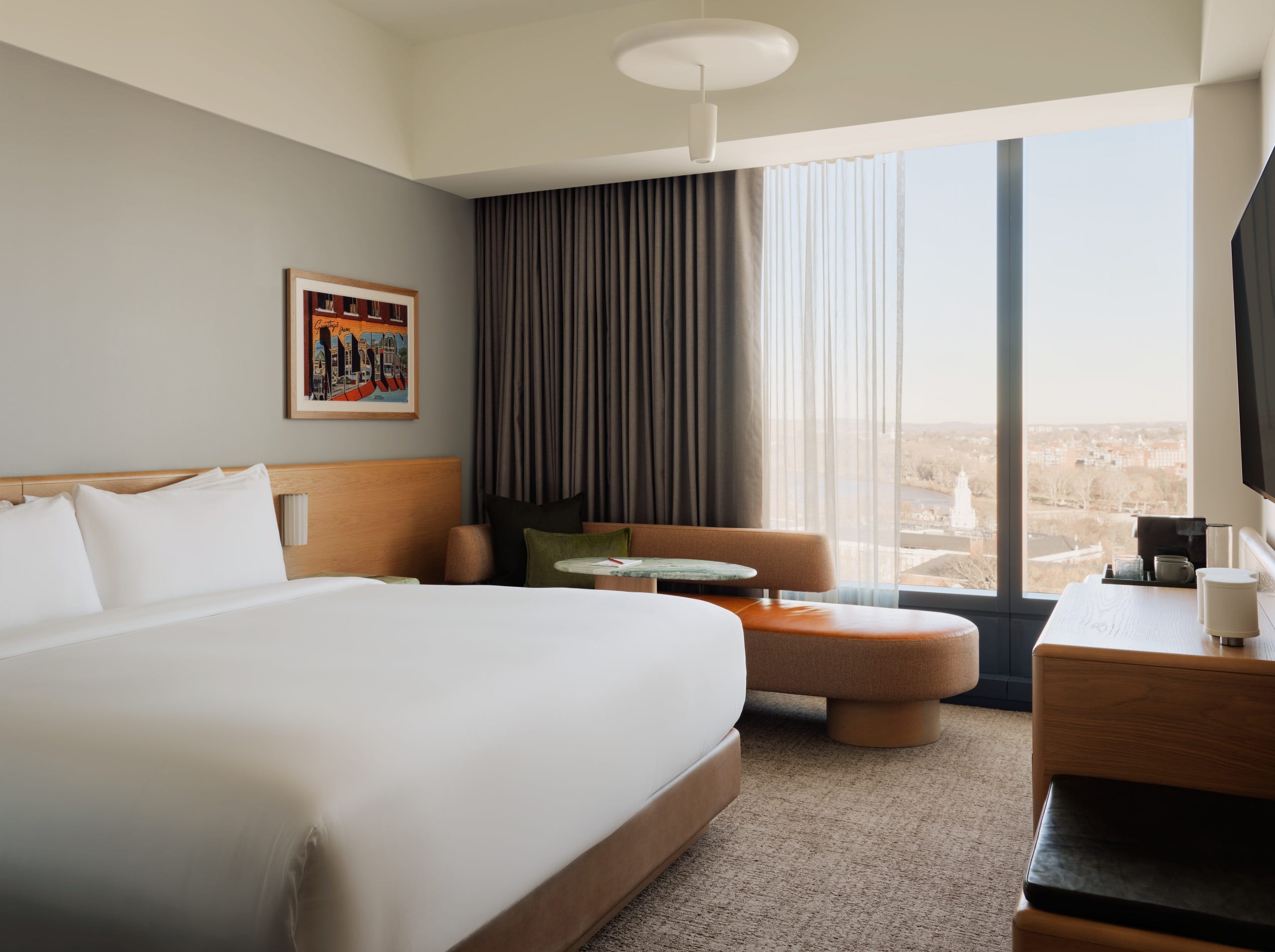
I should say a word about the guest rooms, since I slept in one last night and BERMANFALK provided the furniture. Inc. Architecture & Design out of New York created the interiors, and they designed something that everyone on my room tour said felt grounded, calming, and connected the colors in the expanse below the windows into the rooms. The leather daybed, the green marble coffee table, the muted tones against those floor-to-ceiling windows with views out over Cambridge. It’s residential in the best sense: you feel like you’re staying in someone’s very well-designed apartment, not checking into a hotel.
Harvard’s requirements pushed us and indicated where things are going in terms of what institutions expect from their development partners.
If You Build It, They Will Come
Looking at my notes on the way back to my room, the word that kept coming up was collisions. The Treehouse is designed for it. The Greenway is designed for it. The Atlas, sitting at the intersection of academia, biotech, and a neighborhood that’s learning to trust what’s being built next door, is designed for it.
You take a university that’s been in Cambridge for longer than the country has existed, a developer making its first hotel bet, a neighborhood that’s been skeptical of both, a conference center that didn’t exist before COVID, and 500,000 square feet of lab space with some of the brightest biotech minds in the world, and you put them all on seven acres. Then you build a restaurant, a rooftop bar, a Greenway, and 345 apartments, and you see what happens when all of those people start colliding.
If you build it, they will come. But only if you build it right. And from what I’ve seen, they’re building it right. This project will “go the distance,” and if Harvard’s timeline is right, that distance will be centuries. And that feels so right, polishing this substack off while sitting at the Hotel Commonwealth, in the shadows of Fenway’s Green Monstah.
Don’t miss the next Independent Lodging Conference Confab in Jackson, WY - June 23 & 24 - Information HERE.

Hiiii I’m here too 😆 missed this tour yesterday sadly - but the treehouse looks incredible!!