

I spent last week at the NEWH Leadership Conference in Washington, DC, and the word that kept surfacing, in different rooms, from different people, in different contexts, was intentionality.
Not innovation. Not disruption. Not AI.
Intentionality.
It showed up in a joke about waffle makers. It showed up in a conversation about Marriott’s premium brands. And it showed up in the way a former guest, originally from Bulgaria, talked about what we owe the people who actually work inside the hotels we design. More on Bulgaria towards the end - if you keep reading.
Here’s what stuck with me.
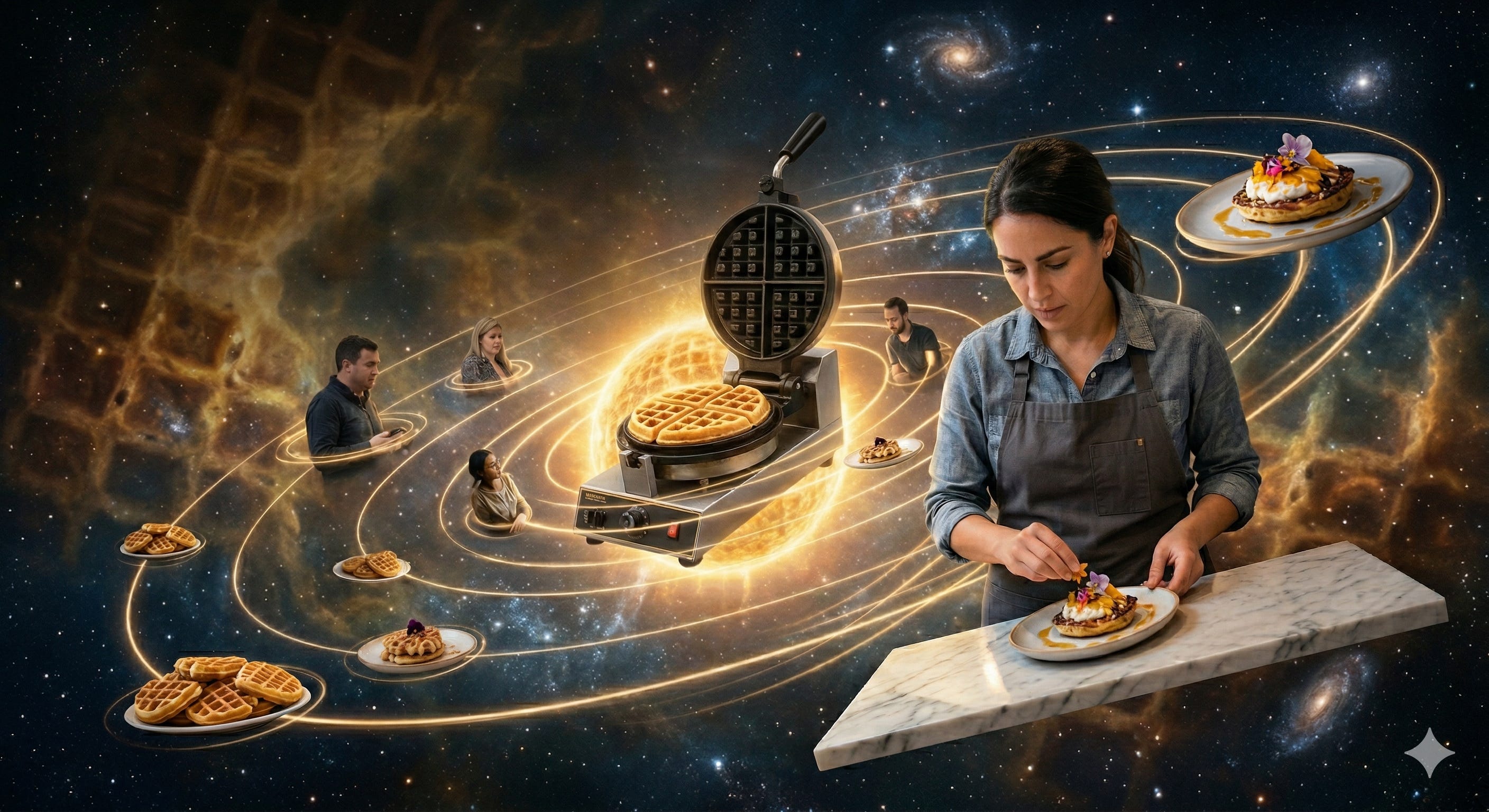
“Hard to Escape the Waffle Maker”
Barry Sullivan of Hilton, a past guest on Defining Hospitality and someone I always enjoy hearing from, commented on the Hospitality on the Move panel that got a knowing laugh from the room: many hotel brands will never be able to escape the waffle maker. Just like my dad loved staying at Courtyards because the same iron, not a waffle iron, mind you - but same difference, was always in the same place in every hotel.
He wasn’t being cynical. He was being honest.
The waffle maker has become a kind of metaphor for the default setting in hospitality, the thing we keep doing because we’ve always done it, not because anyone asked for it. Barry’s point was that F&B is actually the easiest area to change in an established hotel. Menus can evolve. Spirit-free cocktails that look and taste identical to the real thing are gaining traction. Health-conscious options that reflect how guests actually live at home are showing up more and more.
The waffle maker isn’t the problem. The problem is the mindset that says we can’t do anything about it. But as Barry noted, changing the hearts and minds of the calcified ranks who say “this is how we’ve always done it” is often the hardest.
BrandED: The Future of Marriott’s Premium Brands
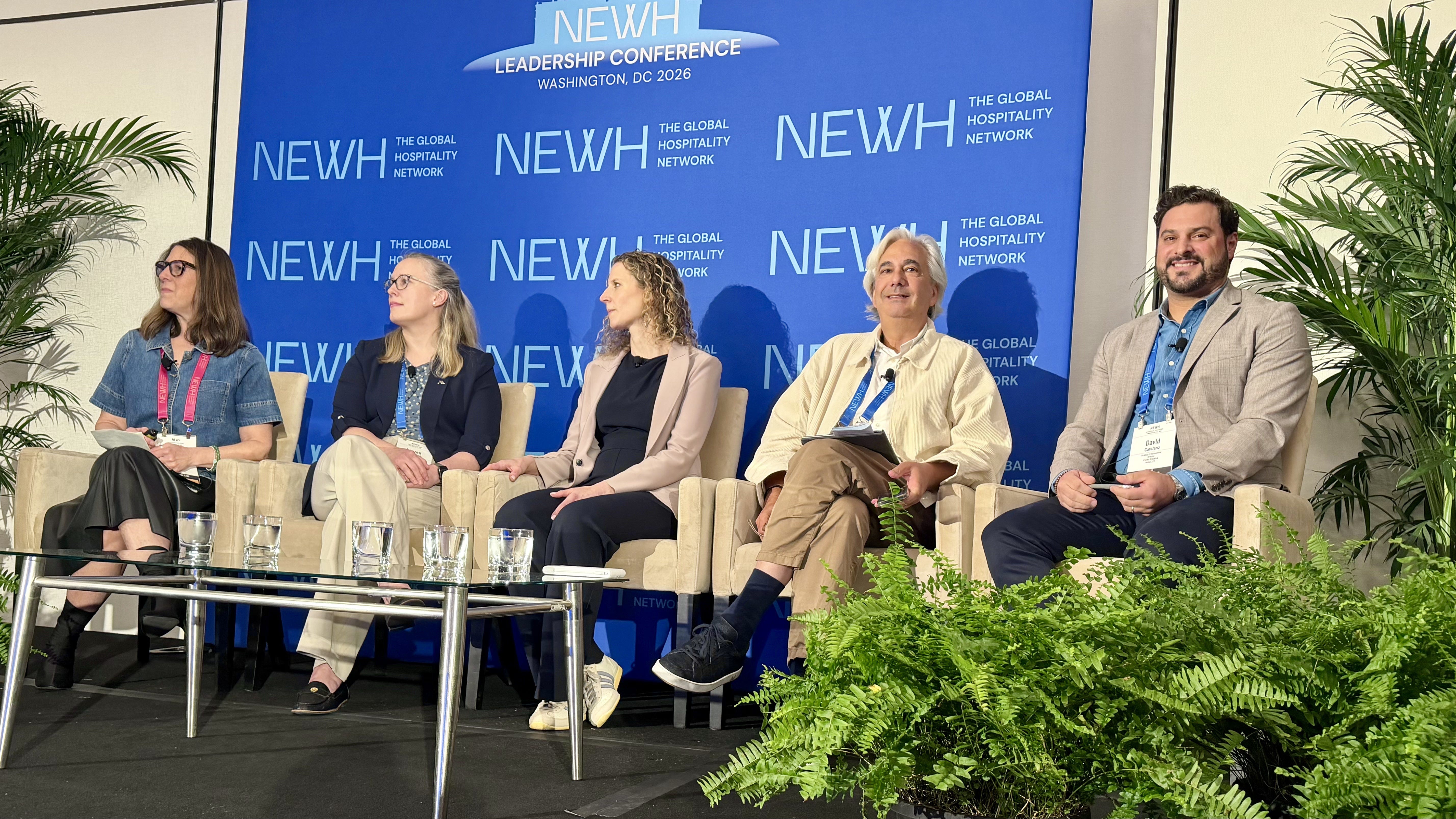
I really enjoyed this one, and for good reason - Marriott took the issue that Barry mentioned above, and did an entire panel on it. Moderated by Linda Laucirica (Senior Director, Global Design, US & Canada, Marriott International, and a former guest), the lineup included Jennifer O’Brien (Marriott International), David Ashen (Saguez & Dash), David Carofano (Crown Creative, and another former guest), and Lauren Uthenwoldt (Washington Marriott at Metro Center).
Full disclosure: BERMANFALK sponsored this session, even though our focus is on guestrooms and not restaurants, we can always learn from other teams that do things expertly. And I’m glad we did, because what unfolded was one of the most candid conversations about F&B strategy I’ve heard in a while. These tend to be popular topics on this Substack, and this panel reminded me why.
The setup was sobering: 77% of Marriott’s premium portfolio properties, Marriott, Sheraton, Delta Hotels, Renaissance, Le Méridien, Westin, are due or past due for a renovation cycle in the next three to five years. This segment represents roughly 54–55% of all Marriott F&B revenue.
Linda framed the challenge well: the full-service segment is big, complex, wildly inconsistent, and, in many cases, lacking a clear point of view.
And then Jennifer O’Brien took the conversation somewhere that had the whole room leaning in.
The One Stop Shop
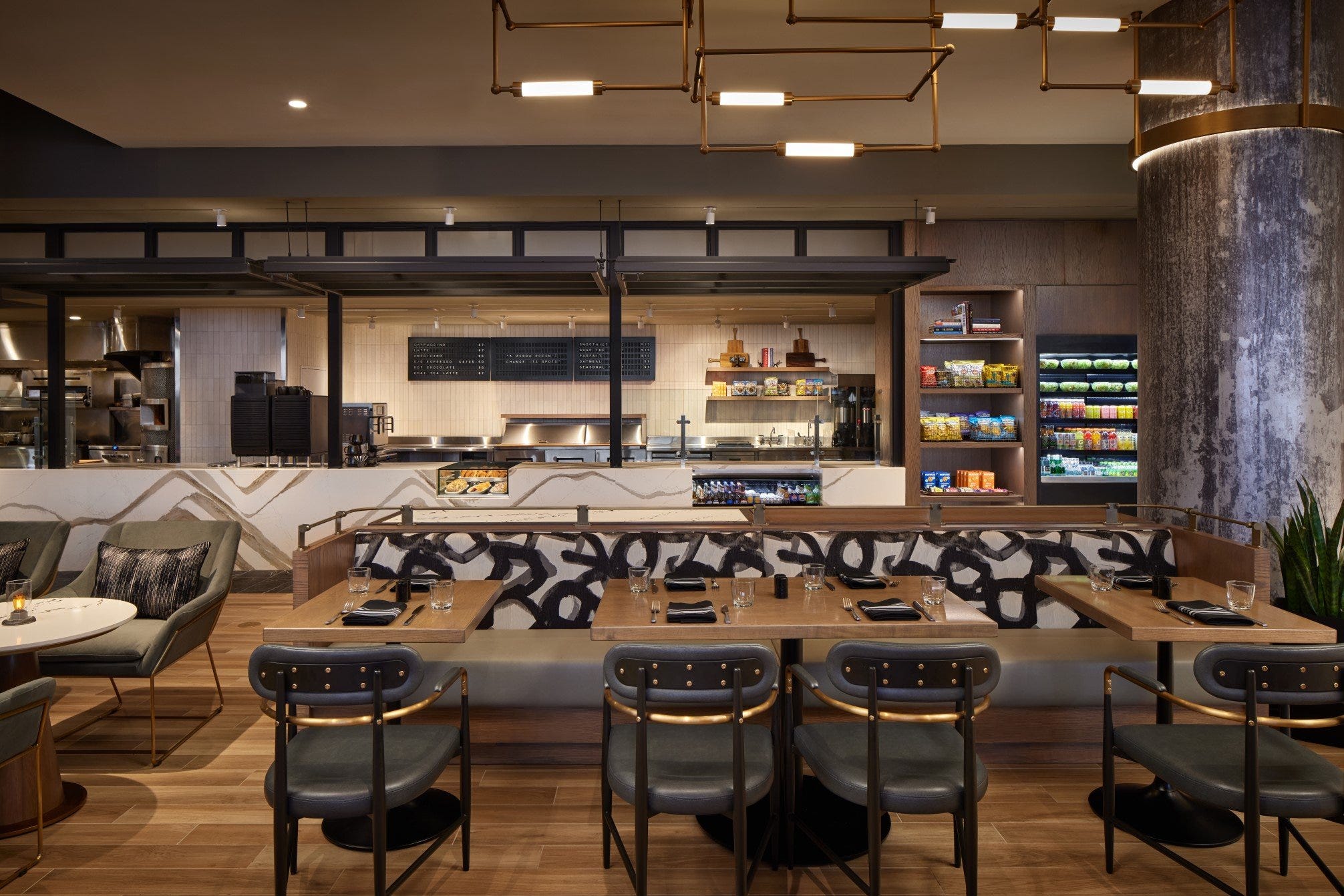
Jennifer described a model Marriott has been developing, which she called the “One Stop Shop.” Think of it as the evolution away from the 300-seat hotel restaurant that sits half-empty most of the day.
Instead, a consolidated public-space concept where coffee and grab-and-go in the morning transforms into a dynamic cocktail experience at night. Same square footage. Different energy. More revenue per square foot. Fewer sad, empty dining rooms.
Her phrase that I keep coming back to: “Who wants to sit in a dead restaurant?”
Nobody. And yet, as an industry, we keep building them and renovating the same footprints and same workflows, because that’s what we’ve always done.
Spine and Soul
What Jennifer was really arguing for, and what David Carofano reinforced, is that premium hotels need to have what she called “a spine and a soul” when it comes to F&B.
Not white tablecloth. Not complicated. But intentional.
“Not complicated, but done well.”
She talked about designing for day-to-night transitions: concealed spirit displays that reveal in the evening, flexible lighting, moveable elements that shift the mood. She called it “concept, form, and function.” And she made the case that F&B has long been the “red-headed stepchild” of hotel operations when it should be treated as one of the biggest opportunities in the portfolio.
The data backs her up: 85% of millennial premium travelers say ambiance, design, and branding are the most important factors when choosing a hotel restaurant. And David Carofano noted that even a 1% ADR increase driven by a strong F&B program justifies the investment. The exclamation point on this: if every hotel public area started with the simple question, “How can this F&B experience add just 1% to the Average Daily Rate?” that would be a game-changer.
The $26 Buffet and “Strange Things Are Afoot at the Circle K”

David Ashen told a story that summed up the mindset problem perfectly. He was walking a property where the operator was running a $26 breakfast buffet and had resisted adding a grab-and-go market for fear it would cannibalize the buffet.
Meanwhile, the guest who just wanted a quick coffee walked out the door and ended up at Circle K. Good for Bill & Ted, not good for the hotel.
“They don’t know what they don’t know,” David said. And that fear of cannibalization? It’s driving decisions that send revenue and guests out the front door. It also misses the opportunity, as David put it, to engage the community around the hotel and invite them in to grab something as well.
Jennifer pushed it further: “What do you have to lose if you’re a little more specific?”
I heard what I’ll call a “food truck mentality”, speed, specificity, personality, and he pointed to the AC Hotel and Boqueria (another former guest, Yann de Rochefort) partnership at the AC near the Port Authority in NYC as the kind of thing that should be rolled out more broadly. Why not? Not a food truck - but a definite point of view as you walk into the hotel - and quite successful to boot.
Intentionality From “Go”
The through-line of the whole panel was that none of this works unless the right people are in the room from day one. Design. Operations. F&B consulting. Ownership. All of them, aligned early, collaborating with what David Ashen called “intentionality.”
Jennifer O’Brien’s parting line landed: “Open the aperture as widely as possible for what’s possible.” She and her team have even launched what she described as a “choose your own adventure” website (I’ll try to find the link later). If you’re going through a renovation lifecycle, it guides you to options, models, and ideas tailored to your property.
It’s a shift from prescriptive to collaborative. And it’s long overdue.
Rado: Design for People
Rado Ivanov of Marriott, another past Defining Hospitality guest, was on the earlier Hospitality on the Move panel with Barry, and his closing thought was the one I walked out of the building thinking about. P.S. If you’re still reading, I’m convinced it was Rado’s family who made Defining Hospitality the number-one podcast in Bulgaria a few years ago. Still grateful for that quick moment of international stardom!
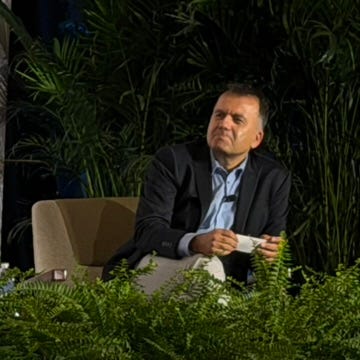
When asked what advice he’d give the room, Rado said: “Design for people. Employees first. Guests always. Owners top of mind.” To me, this echoes Danny Meyer’s thinking in Setting the Table, where owners and investors are the last stakeholders in the hierarchy, because if you take care of employees, guests, the community, and your suppliers, the investors will ultimately be overjoyed with their returns.

His logic is clean: the experience is driven by the people on property. If you don’t design for the staff, nobody’s happy. If nobody’s happy, the guests feel it. And if the guests feel it, the owners don’t make a profit.
He also offered the most grounded take on AI I heard over the past couple of months, and I hope that’s not my hubris talking. Technology is “ever hyped,” he said, and where it actually helps most is at the points of friction, the tasks that people didn’t follow their passions into hospitality to do. But the brands that win long-term? They’ll be the most human ones, not the most automated.
Rado also warned the room about AI-generated design packages. He described a situation where a furniture supplier ran a designer’s package through AI to produce shop drawings, and what came back looked real but had no substance. No dimensions. No detail. “Like a three-year-old put it together.” This landscape is changing rapidly, so let’s see how my take on this ages.
AI is a tool. Not a substitute. And when we use half-baked tools, without human guardrails, to replace expertise and HUMAN EXPERIENCE, things can fall apart.
The Front Row Takeaway
Two panels. Two rooms. One thread.
Barry Sullivan reminded us that the defaults we accept, the waffle makers, the empty restaurants, the “we’ve always done it this way”, are choices, not mandates. And F&B is the easiest lever to pull.
Jennifer O’Brien and the BrandED panel showed what it looks like when a massive brand segment decides to get intentional, about flexibility, about narrative, about having a point of view. Seventy-seven percent of the premium portfolio is about to be touched. That’s not a renovation wave. That’s a chance to rewrite the story. COME ON, BABY! I hope this dam of deferred cap-ex breaks soon.
And Rado Ivanov brought it back to first principles: design for the people who work in these spaces, and everything else follows.
Intentionality isn’t a buzzword. It’s the opposite of one. It means doing fewer things, but doing them on purpose and doing them well. Give your F&B a spine instead of a buffet line. Design a room that serves employees, not just photographs well. Ask “what do we have to lose?” instead of “what if it cannibalizes?”
The hotels that figure this out won’t just look better. They’ll perform better. And the people inside them, guests and staff alike, will feel it.
That was the real lesson from the front row.